Boosting food productivity and power by optimizing the use of the sun.

This project truly revolves around the sun. A solar energy expert at Western University is applying open-source photovoltaic technology to optimize the use of the sun’s energy to support both indoor and outdoor production of different varieties of berries. Modular and scalable, the production system can be adapted to growing conditions across Canada, including the north, and could ultimately produce enough energy to supply far more than farms.

Agrotunnel agrivoltaics hybrid for sustainable food production.

Western University researchers are devising an extraordinary twofer of technological advancements that could unlock an incredible amount of untapped potential on Canadian farms. Working with private partners, the team is coupling an indoor vertical farm with a shielded outdoor farm to create a low-carbon growing system that will extend the growing season of multiple types of berries. This dual-environment approach could one day even generate power for non-agricultural use and be attached to retail locations to provide a zero-mile food supply.
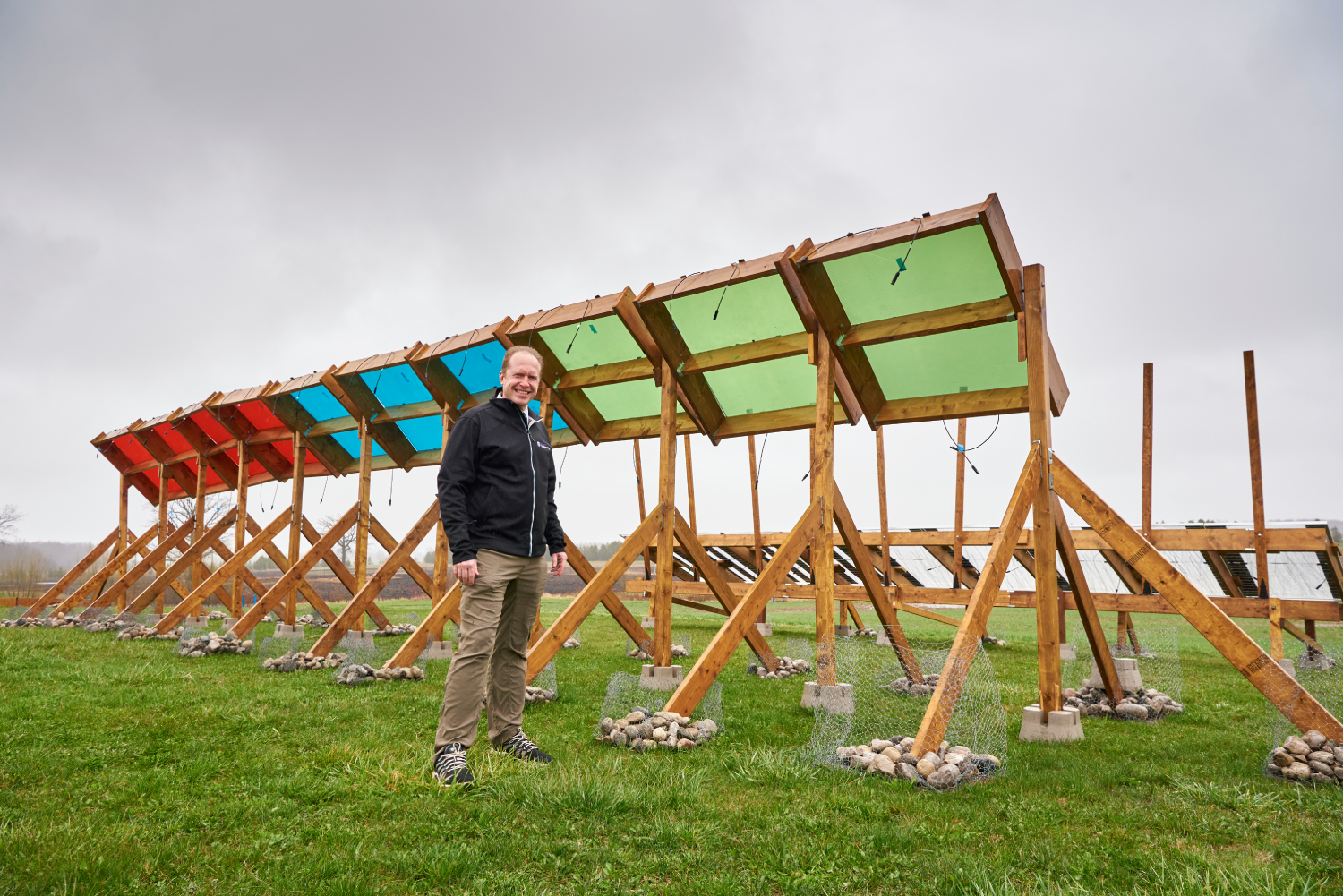
The key to increasing productivity in both indoor and outdoor growing spaces is agrivoltaics—specialized solar panels that both allow the transmission of natural light to plants underneath while also producing electrical energy—to turn solar energy into electricity on agricultural land. “It could be massively beneficial,” says Joshua Pearce, the John M. Thompson Chair in Information Technology and Innovation at Western University, where he holds appointments at both the Ivey Business School and department of electrical and computer engineering.

“A small percentage of Canada’s farmland turned agrivoltaic could take on all of our electrical needs.”

Five types of berries will grow outdoors under adjustable photovoltaic (solar) arrays, where plants will be protected from extreme weather and require less water than conventionally produced crops. Energy collected by the arrays will power the lights, water pumps, and heat pumps of the indoor vertical farm, decreasing energy demands and costs.

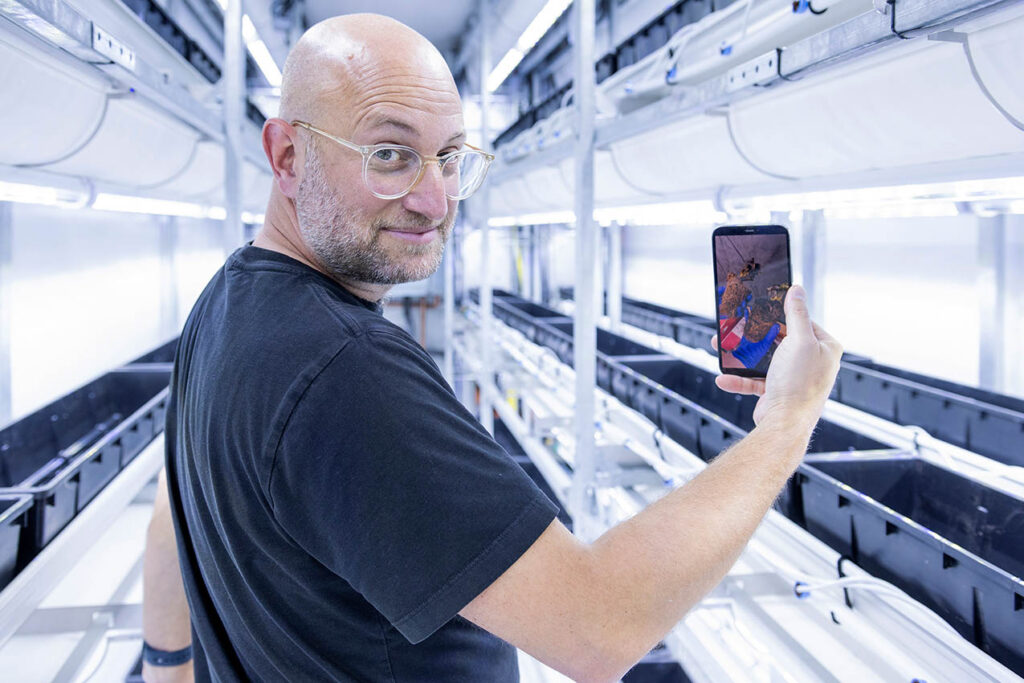
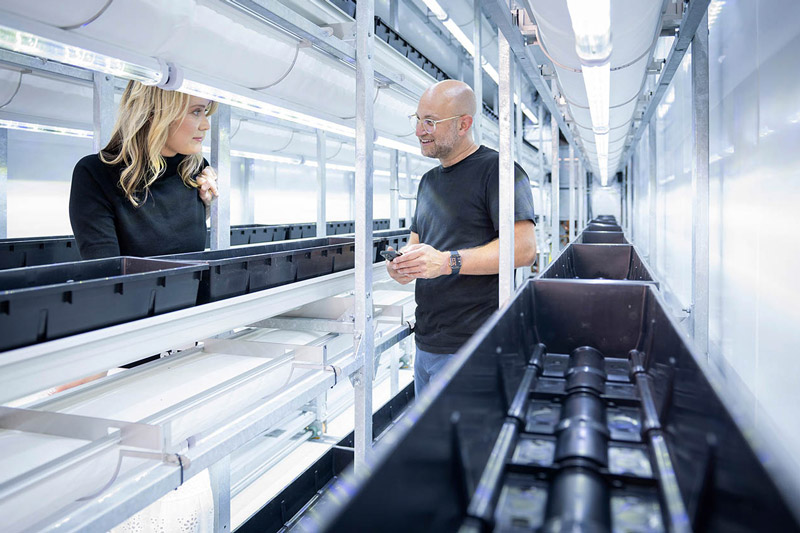
The vertical farm will be housed within an agrotunnel supplied by Food Security Structures Canada, a Métis-led controlled-environment growing company. The agrotunnel is a fully sealed chamber made of a lightweight fibre-reinforced polymer that can be above ground or buried to evoke J.R.R. Tolkien’s imaginary hobbit houses when covered with earth and vegetation. Inside, blueberries and strawberries will be planted on grow walls, while raspberries, blackberries, and ground cherries are grown in bins along horizontal rows. “The density is crazy,” Dr. Pearce says. “It’s like walking into a library where every row of books is strawberries.”
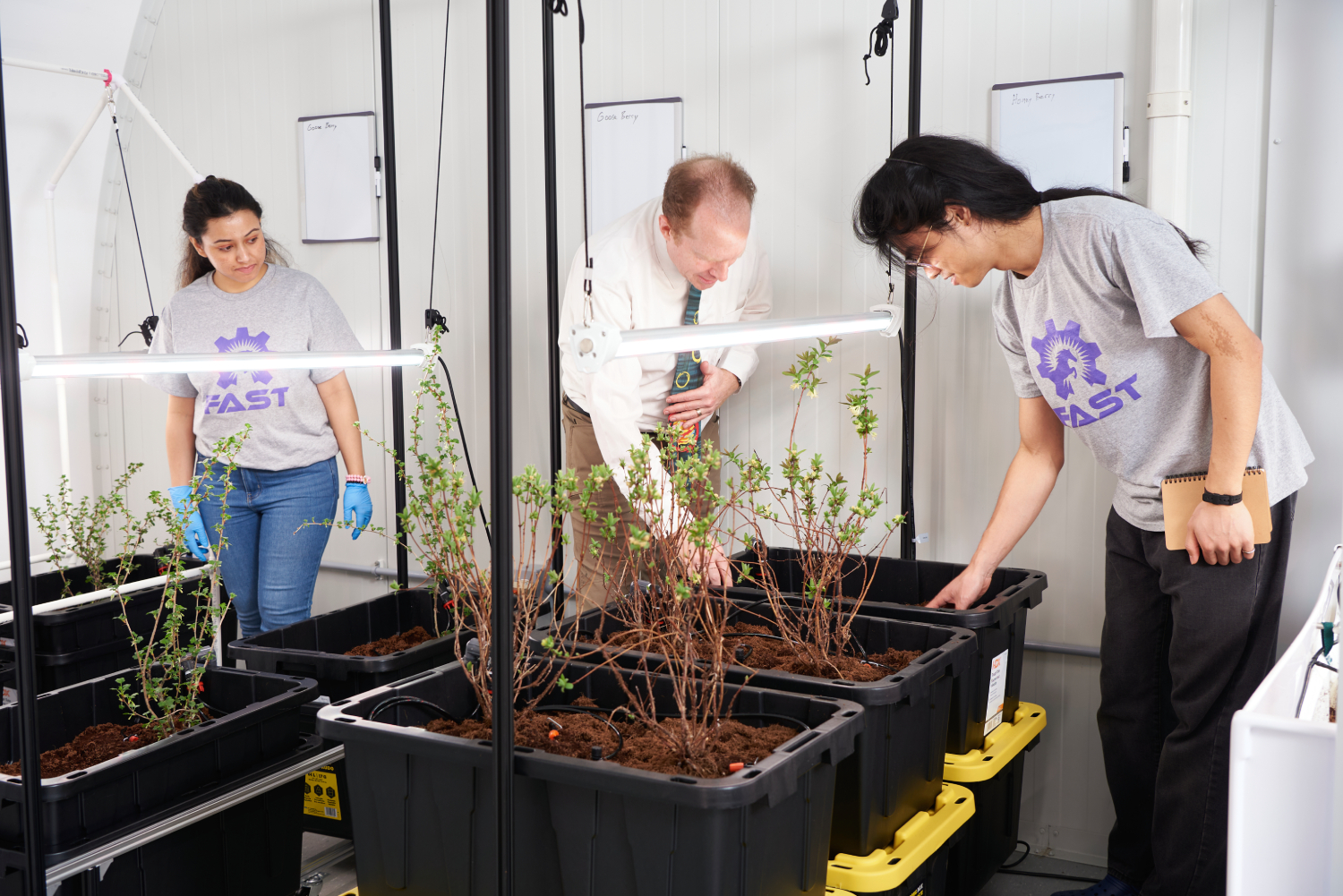
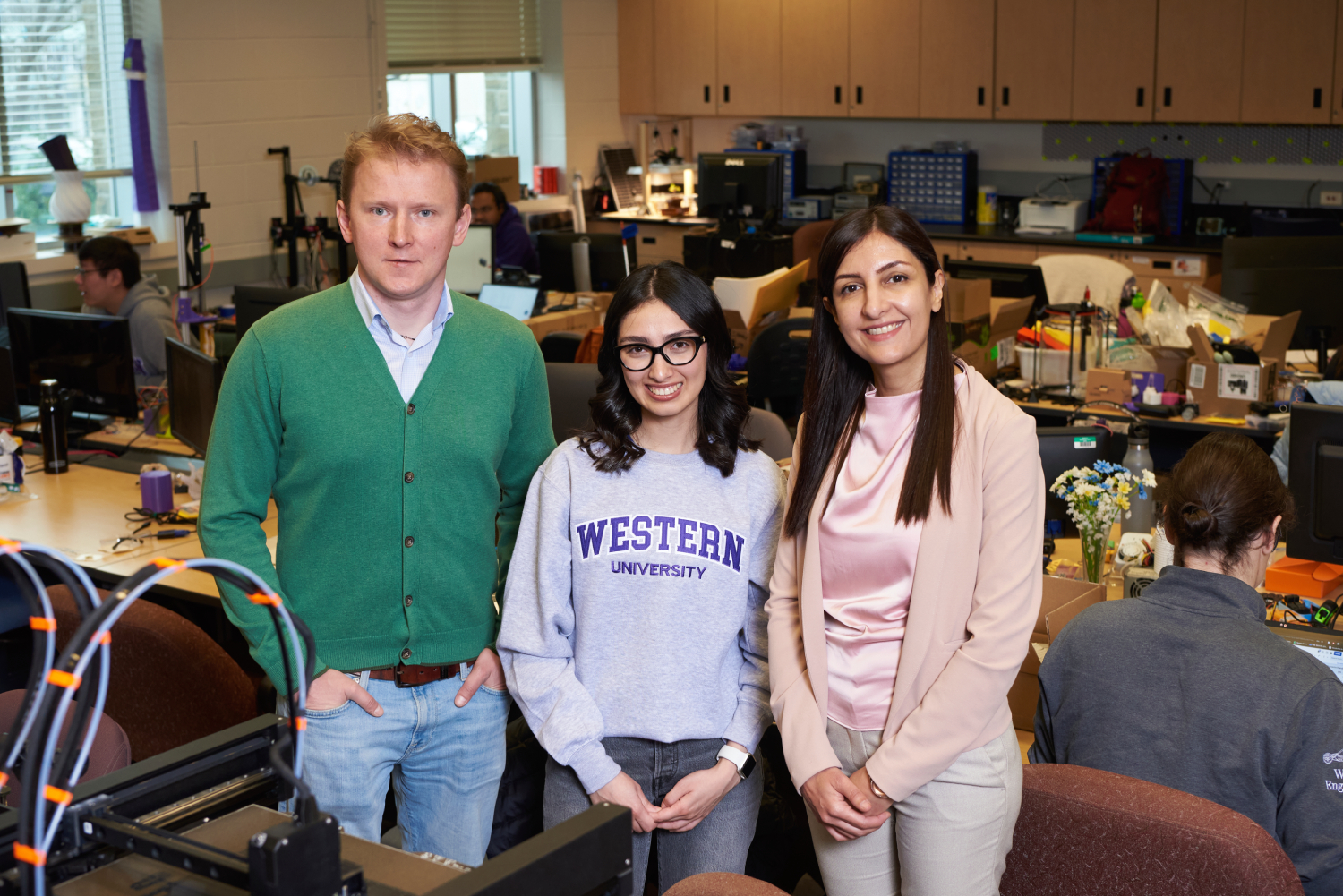
The vertical aeroponic hybrid system uses peat cups and a coco-coir medium (which are pest resistant without the use of chemicals) and high-efficiency, spectrally optimized LED lights. Plant health will be monitored by open-source computer vision, machine learning, and artificial intelligence systems designed in the Free Appropriate Sustainability Technology (FAST) lab in collaboration with electrical engineer Soodeh Nikan. Raymond Thomas, Western Research Chair in the department of biology and the scientific director of the Biotron Experimental Climate Change Centre, will investigate the nutritional profile of the berries to determine how the growing methods influence food quality.

Modular and scalable, the production system can be adapted to growing conditions across Canada, including the north, and could ultimately produce enough energy to supply far more than farms. “It’s giant,” Dr. Pearce says, recalling his early research into agrivoltaics’ potential in North America. “It was like, ‘Guys, this is it. This is what we should be doing.’”

Collaborators

  • Shawna Ferguson, Western University
  • Janice Kelsey, SolarCities
  • Kim Parker, Food Security Structures Canada
  • Tabatha Siu, Vertical Green
  • Jody Spangler, Adragone Aeroponics
  • Greg Whiteside, Food Security Structures Canada
Turbo-charging vertical farms, and tailoring plant microbiomes.

This team based at the University of Ottawa seeks to produce True North Berries, which can be grown anytime, anywhere in Canada. Key to the roots-to-shoots approach is a proprietary vertical-farm platform that is turbo-charged by the use of genetically engineered microbes and a carbon dioxide micro-capture and use device.

True North Berries: Food sovereignty through additive innovations with a Canadian twist.

“What I really love are plants and microbes and studying how they interact with each other. It blows my mind,” says Allyson MacLean of her passion for the microbial realm.

Symbiotic interactions between plants and microbes—bacteria and fungi—have been the main focus of Dr. MacLean’s Symbiosis Lab at the University of Ottawa, creating a body of research that the lab is leveraging to advance biotechnology. “I try to tap into that knowledge in a way that benefits farmers and industry,” she says, “so it’s not just learning, but putting an applied angle on it.”

The project’s public-private partnerships bring together researchers from the University of Ottawa with Cornwall-based Fieldless, a controlled-environment agtech company that grows greens indoors 365 days a year, using renewable power and no herbicides or pesticides. Dr. MacLean met CEO Jon Lomow three years ago and they have been looking for a reason to work together ever since. “Jon is very pro-research and innovative. He is committed to applying cutting edge science to his farms and prioritizes sustainability.“

“There’s such potential for sculpting the microbiome to help plants grow.”

The True North Berries project takes a holistic, roots-to-shoots approach to growing strawberries by layering a number of innovations targeting each part of the plant’s functions. Starting at root level, specific microbes will promote plant growth and temperature resistance, a cost-effective way to boost productivity. Dr. MacLean will collaborate with Ceragen, a Waterloo-based startup focused on microbial inoculants for hydroponics. Together, they will explore how bacteria could serve as beneficial microorganisms that improve the productivity, taste, and health benefits of strawberries. “I am most excited to identify microbial inoculants that are specific to strawberries,” Dr. MacLean says. “What are they? Can they be leveraged to other crops? There’s such potential for sculpting the microbiome to help plants grow.”

Dr. Marina Cvetkovska, a colleague of Dr MacLean and a fellow biologist at the University of Ottawa, will help identify light recipes to improve photosynthesis in the leaves to promote faster growth under optimized conditions. Dr. Patrick Dumond in the faculty of engineering will tap into his expertise in vibration and acoustic design to develop a beeless pollination system—using mechanized vibrations to mimic buzzing bees—to lower the growing system’s environmental impact by easing the strain on pollinators, while also reducing costs. “The combination of these innovations can deliver the yields needed to achieve cost parity with imported berries all year long,” says Dr. MacLean.

Brussels-based Vertiberry is designing the project’s core growing system, adapting a proven vertical-growing platform that will harness the Canadian climate to maintain appropriate growing temperatures—a process known as free cooling. The system will also be equipped with carbon micro-capture technology developed by Amsterdam’s Skytree, which extracts carbon dioxide from the atmosphere to deliver to the plants inside the farm and displace what would typically require a fossil fuel–based process.

The goal of the True North Berries team is to find a combination of innovations that will make indoor, locally grown, year-round strawberries able to compete head-to-head with imports across Canada. “We are running out of farmland and we’re a cold nation,” Dr. MacLean says. “Vertical farming and indoor agriculture are going to be play a significant role in the future.”


Collaborators

  • Jon Lomow, Fieldless
  • Danielle Rose, Ceragen
  • Marina Cvetkovska, University of Ottawa
  • Patrick Dumond, University of Ottawa
  • Skytree
  • Vertiberry

Variety is the spice of life, and it may also be the secret to year-round blueberry production.

Like many crops, blueberry plants are highly sensitive to environmental conditions. Simon Fraser University and BeriTech Inc. are teaming up to apply advanced and proprietary technologies like airflow management to create the perfect growing conditions. Their plant-centric approach focuses on selecting blueberry varieties that are best suited to indoor growing and tailoring environmental conditions to drive optimal fruit yields and quality.

High-intensity production system to deliver local, off-season fresh blueberries at scale

Jim Mattsson, professor of plant functional genomics at Simon Fraser University, and his team are using a plant-centric approach to identify optimal environmental conditions and the best suited varieties for indoor blueberry production. The project also aims to use gene editing methods to adapt blueberry varieties to this new environment.

This is a collaboration between academia and the private sector, and the project takes a comprehensive approach to increasing blueberry yields by combining plant genetics, physiological manipulations, and precision-controlled-environment technologies. The goal is a high-intensity production system that will yield fresh, pesticide-free blueberries at scale outside the traditional Canadian growing season. Blueberries are the first target, eventually to lead the way to off-season, low-carbon-footprint production of other berries. Farmers will appreciate this opportunity to increase their revenue.

The search for suitable starting varieties was undertaken by team members Eric Gerbrandt, PhD, and Rodrigo Santana, managing partners of BeriTech Inc. They visited several blueberry farms and nurseries in Mexico and Peru, where blueberries grow under nearly ideal conditions, and studied how those conditions might be replicated and improved under a precision-controlled environment in the Northern Hemisphere. “We have to start with the plant,” Dr. Gerbrandt says. “And then we can tailor environmental conditions to what the plant needs.”

“We can perfect conditions to take full advantage of the plant’s genetic potential.”

Back in Canada, Dr. Mattsson furthered his research into the combined effects of genes and the environment on the physiology of older unpatented public blueberry varieties. He identified genes that enable blueberry plants to adjust to indoor growth, which can be targets for gene editing or be manipulated by altering growing conditions, such as lighting and temperature. These adaptations will alter the architecture of the plant to create more compact versions that grow faster, set fruit sooner, and have a higher number of fruit buds. “We’re not introducing anything,” Dr. Mattsson says. “We’re actually reducing the function of existing genes, which is no different from rice and wheat varieties that people have been eating for the past 50 years. It’s just accomplished with a more targeted approach.”

They will also be evaluating new varieties bred by leading global breeding programs to see which are best suited to indoor environments. Growth trials will test the productivity of two harvests per year during the off-season when local blueberry production outdoors is not possible. If successful, this scalable, plant-centric model could be customized and replicated to other crops. “We can perfect conditions to take full advantage of the plant’s genetic potential,” Dr. Mattsson says. “That’s what this project is about,” says Mr. Santana. “Leveraging blueberry plant genetics and ideal environmental conditions to optimize fruit yield and quality per unit space and energy cost.”


Collaborators

  • Clay Braziller, Simon Fraser University
  • Simone Diego Castellarin, University of British Columbia
  • Jeremy Dresner, BeriTech Inc.
  • Karla Garcia, BeriTech Inc.
  • Eric Gerbrandt, BeriTech Inc.
  • Terri Griffith, Simon Fraser University
  • Andrew Harries, Simon Fraser University
  • Matthew Jude, BeriTech Inc.
  • Jesús Morales Huerta, Fall Creek Farm and Nursery
  • Thorsten Knipfer, University of British Columbia
  • Patricio Munoz, University of Florida
  • Ivone de Bem Oliveira, BeriTech Inc.
  • Juan Rodriguez Lopez, Simon Fraser University
  • Paul Sandefur, Fall Creek Farm and Nursery
  • Rodrigo Santana, BeriTech Inc.
  • Sean Smukler, University of British Columbia

It’s time to reimagine the path of agriculture.

A botanist and mechanical engineer at TMU are redesigning vertical technology originally developed for indoor cannabis production. Their pesticide-free system for raspberries and blackberries is a microclimate-controlled, multilayer growing system that actually helps plants take control of their own environments. Ideally, the innovative system will reduce the demanding labour and other burdens that cause many Canadian families to give up their farms.

Growing for the future: delivering an approach that supports continuous berry production in Canada and beyond.

“Everything Habiba and I are going to do over the Shepherd Phase is kind of like magic,” says Lesley Campbell, describing the groundbreaking growing system she is developing with Dr. Habiba Bougherara through their respective labs at Toronto Metropolitan University.

Dr. Campbell and Dr. Bougherara became fast friends when they originally teamed up to create an energy-efficient machine for indoor cannabis production. Their work was great, but their timing wasn’t: unfortunately, the project coincided with the cannabis crash. Enter the Homegrown Innovation Challenge. The botanist and the mechanical engineer took this opportunity to redesign their technology to produce a pesticide-free growing system for raspberries and other soft fruit. The result is the iGrow Platform: a microclimate-controlled, multilayer growing system—the start of something magic indeed.

The iGrow Platform’s self-monitoring, analysis, and reporting technology (SMART) is a key innovation; it actually helps plants control their own environments. The top and bottom of the plant are fitted with biosensors (produced by Vivent SA) that deliver signals indicating whether the plant is healthy and happy or under stress. A program customized by Argus Control Systems can trigger real-time responses to the plant’s needs, adjusting essential variables like light, water, and fertilizer. “We are going to find out what plants really want,” Dr. Campbell exclaims. “Our system will help us listen to plants and learn more about their fundamental needs, something they have never been able to communicate to us before, and will reduce nutrient and water waste.”

“If we listen to plants, we can change the world!”

The system will be powered by a triboelectric generator developed by Tricia Breen Carmichael of the University of Windsor. The generator harvests energy from static electricity, and may also be run on solar power systems and methane biodigesters.

These advanced technologies will help farmers overcome persistent obstacles to growing raspberries in northern climates. On a per-acre basis, raspberry wholesale prices outperform those of blueberries—Canada’s largest soft fruit crop—by 480%, yet Canada is the third-largest importer of raspberries globally. The iGrow Platform prototype addresses the major challenges faced by growers, including our country’s unpredictable climate, pest control issues, and high labour costs. Testing has demonstrated its ability to increase raspberry production per acre by as much as 350% and extend the growing season to 12 months. This increase in productivity would be life changing for farm families across the country.

Dr. Campbell and Dr. Bougherara see a path toward sustainable food production that also gives growers a deeper understanding of their plants. As importantly, their system could reduce the demanding labour and other burdens that cause many families—including Dr. Campbell’s—to give up their farms “Farming was my life growing up, and I couldn’t see my future in the family business,” she says, recalling the decision to let her family’s cabbage farm go after her father retired. “We need to humanize this. Even though we’re industrializing agriculture, there are still farm families behind it.”


Collaborators

  • Geoff Crocker, Argus Control Systems
  • Thabet Belamri, EASTechnology
  • Nicholas Burgwin, Toronto Metropolitan University
  • Tricia Carmichael, University of Windsor
  • Brendon Falcon, Falcon Blueberries
  • Line Lapointe, University of Laval
  • Ahmed Naderi, LAW Consultants
  • Greg Ogiba, GRO Advantage
  • Carol Plummer, Vivent SA
  • Tyler Smith, Agriculture and Agri-Food Canada

Scientists who propose to grow food in space can use the same techniques to grow food In Northern Canada.

Applying lessons learned from projects undertaken to grow food in space, the Seasonal Strawberry Optimization project out of the University of Guelph offers a science-based solution for high-density planting using an energy- and space-efficient indoor environment, and customized LED lighting. Their vertical-farm design accommodates both production and plant propagation and will enable farmers to shift from quick-growing-leafy crops to more energy-dense crops, like berries.

Seasonal Strawberry Optimization: A hybrid approach to addressing seasonal challenges of strawberry production and food security in Canada.

“If we can grow food in space, we can grow it anywhere.” That’s the guiding principle behind a University of Guelph team’s innovative approach to producing crops in the world’s most challenging environments. “The solutions that we’ve got for the Moon and Mars are even more suitable for harsh environments here on Earth,” says project leader Mike Dixon, “especially Canada, and Canada’s North in particular.”

Director of the Controlled Environment Systems Research Facility at the University of Guelph, Dr. Dixon established the university’s Space and Advanced Life Support Agriculture program, which provides advanced life support research to the Canadian Space Agency, NASA, and the European Space Agency. “In space, recycling is key,” he explains. “There can be no waste in space. You can’t throw anything away, especially water and nutrients, so that’s a critical technology transfer that we’ll exploit.”

“If we are going to grow food year-round in Canada, then we are going to have to grow indoors. Hybridization is key, and this is about being complementary, not competitive.”

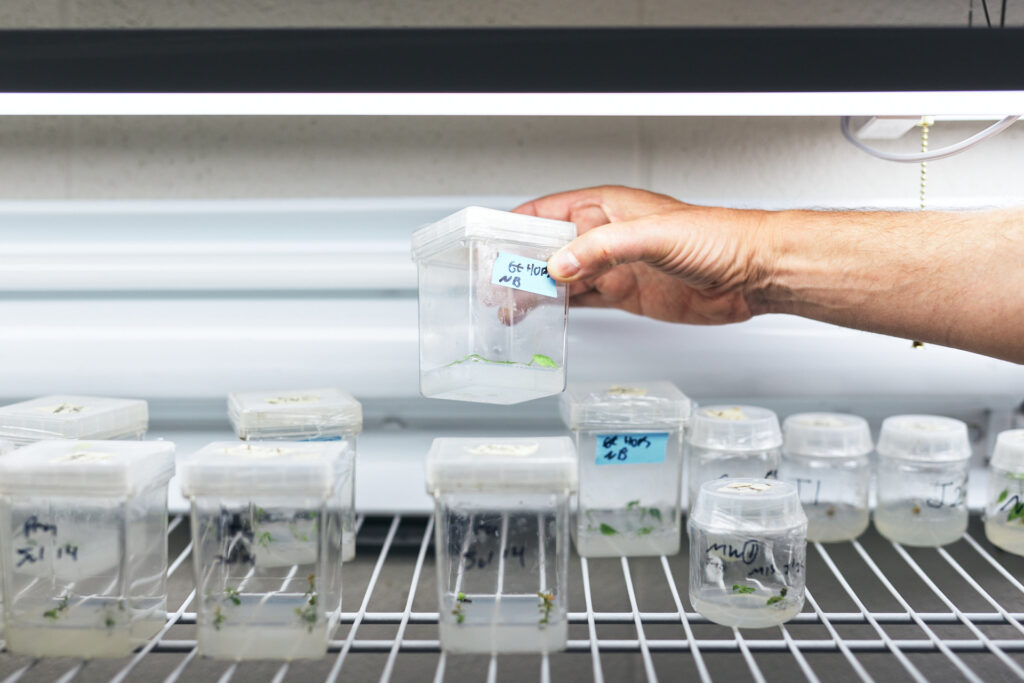
The chilly, light-deprived terrains of Canada’s northern regions can’t support robust agriculture, which has created a dependence on imports and food insecurity for local populations. The Seasonal Strawberry Optimization project offers a science-based solution for high-density planting using an energy- and space-efficient indoor environment. Developed with co-applicants Dr. Thomas Graham and Dr. Michael Stasiak of the University of Guelph, the project will grow and propagate strawberries on a large scale by combining advanced greenhouses with vertical farming methods. The hybrid configuration maximizes the available sunlight during the traditional growing season and extends the season through customized LED lighting. “You can take full advantage of the sun when it’s there,” Dr. Graham says, “but with the hybridized system, we’re getting the best of both worlds.”

This resource-sparing but highly productive approach will enable farmers to shift from quick-growing leafy crops to more energy-dense crops, such as berries. Strawberries are particularly well suited to the hybrid production system, having an appropriate physical stature and growth habit for both greenhouses and vertical farming. With their short shelf life and annual import values of nearly $475 million, fresh strawberries have long been ripe for investment in year-round domestic production.

The project team also includes leading controlled-environment agriculture experts from the University of Guelph and Mucci Farms, one of Canada’s largest greenhouse growers and the largest controlled-environment strawberry producer in North America. Scalable and energy efficient, the team’s hybrid design can be modified to grow other fruits and vegetables in a variety of environments, such as the hot, dry climates of the Middle East. “There are extreme environments all over Earth where agriculture simply is not economical,” Dr. Dixon says, “and we propose to make it so.”

Dr. Graham adds, “We just need to change the definition of what farming is. Is a shipping container a farm? Yes.”


Collaborators

  • Bert Mucci, CEO, Mucci Farms
  • Mathew Walsh, CFO, Mucci Farms
  • Herney Hernandez, Head Grower, Mucci Farms
  • George Dekker, Project Manager, Mucci Farms
  • Nasir Mahmood, Senior Grower, Mucci Farms
  • Jamie Lawson, University of Guelph
  • Theresa Rondeau Vuk, University of Guelph